
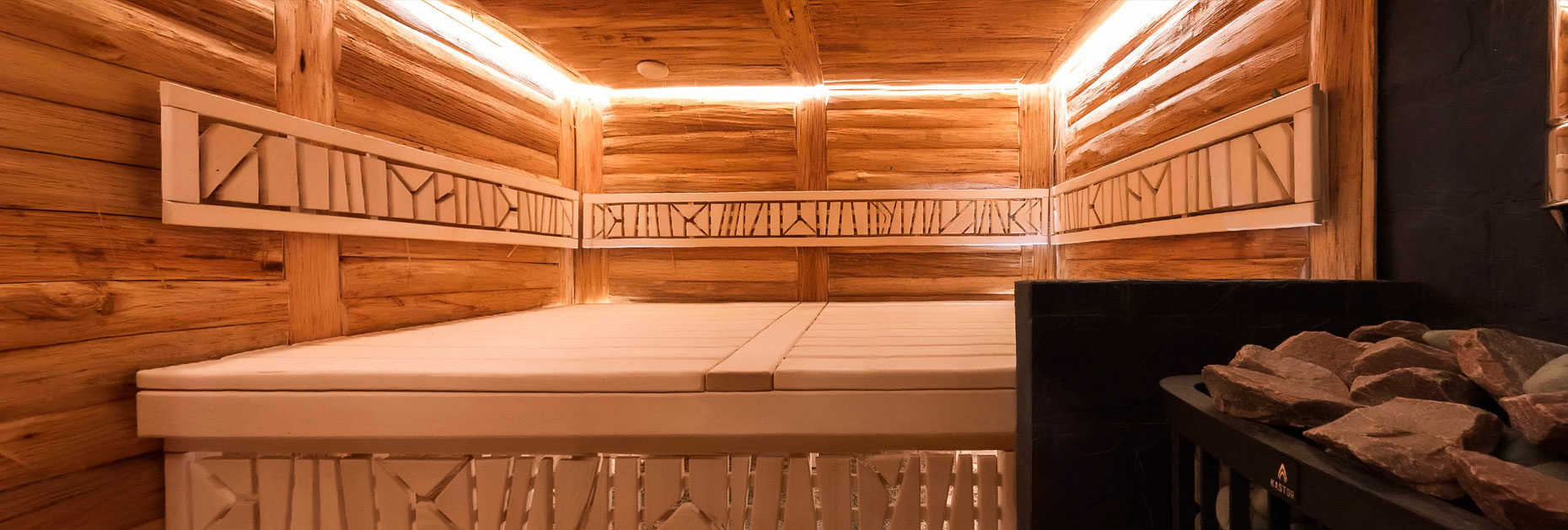
The wellness industry continues to grow rapidly around the world. More people are investing in personal spaces dedicated to recovery, relaxation and wellbeing. As a result, the infrared sauna in 2026 is becoming an increasingly popular feature in both residential and commercial properties.
Today, infrared saunas can be found not only in private homes. They are also installed in SPA centres, fitness clubs, hotels, wellness complexes and luxury apartments. This format appeals to property owners thanks to its compact size, modern appearance and ability to integrate into a wide range of environments.
The main difference between an infrared sauna and a traditional sauna lies in the heating method. A conventional sauna heats the air inside the room, while infrared equipment delivers heat directly to the human body through infrared radiation. As a result, the air temperature remains more comfortable while providing an effective warming experience.
Modern infrared sauna design has evolved far beyond the traditional wooden cabin. Today, these spaces are designed as part of the overall concept of a home or SPA complex and become an integral element of interior architecture.
Before selecting an infrared sauna project, it is useful to understand the key differences between infrared and traditional saunas.
Infrared Sauna vs Traditional Sauna: Key Differences
| Feature | Infrared Sauna | Traditional Sauna |
|---|---|---|
| Heating Method | Direct body heating through infrared panels | Air heating through a sauna heater |
| Temperature | Typically 40–65°C | Typically 70–110°C |
| Preparation Time | Fast warm-up | Longer heating time |
| Size | Often more compact | Usually requires more space |
| Apartment Installation | Highly suitable | More limited due to technical requirements |
| Interior Integration | Easily adapts to modern interiors | Requires more complex preparation |
Both options offer unique benefits and suit different needs. However, an infrared sauna for home is often chosen by apartment owners and homeowners due to its compact size and flexibility in design.
Popular Infrared Sauna Design Ideas
Modern infrared sauna design continues to evolve. Today, property owners seek to create not just a functional room, but a space that blends seamlessly into the overall interior.
Minimalist Design
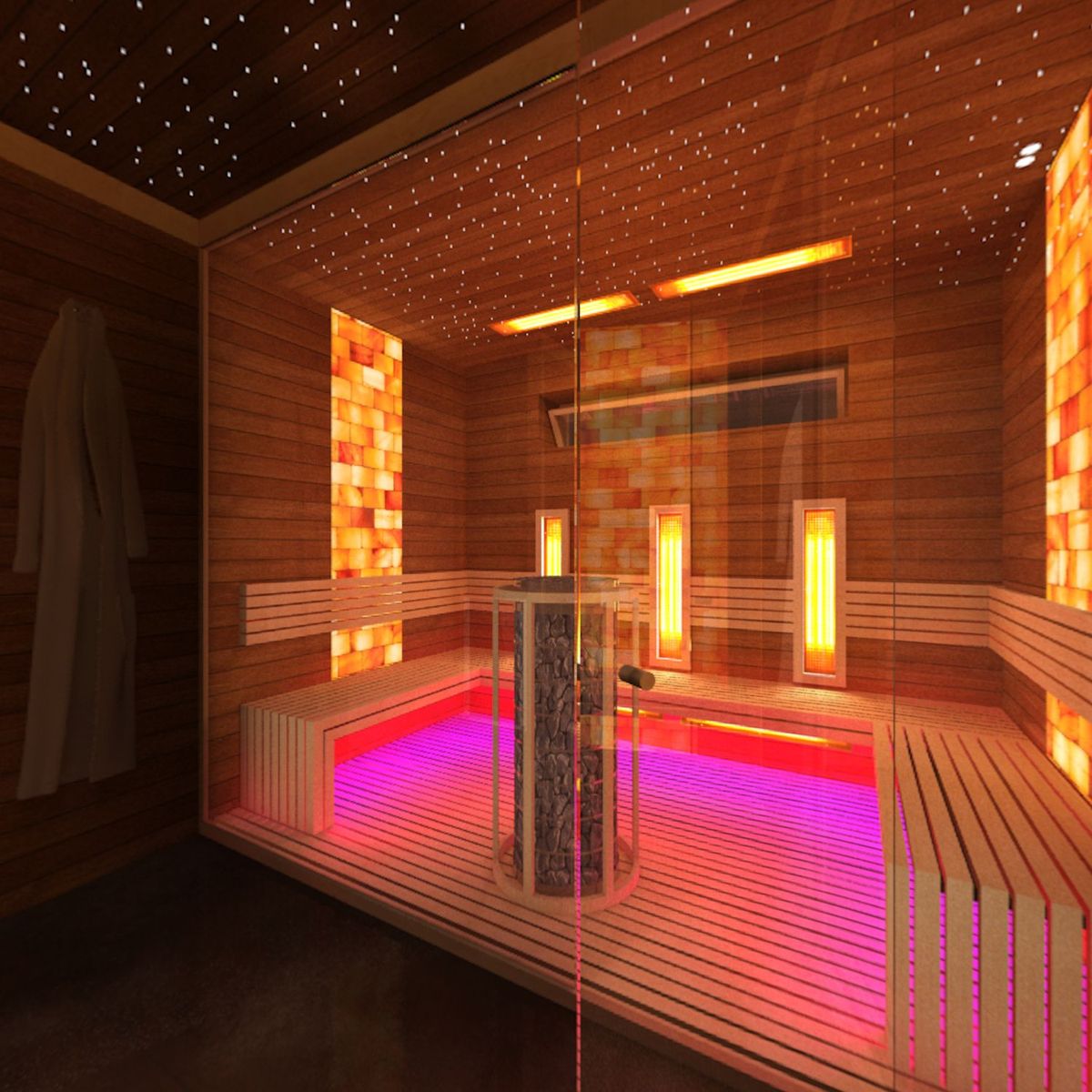
Minimalism remains one of the most popular approaches.
These projects often feature:
- light-coloured wood species;
- glass doors;
- concealed lighting;
- minimalist hardware;
- clean geometric lines.
This approach creates a visually light and elegant space that integrates naturally into contemporary interiors.
A minimalist infrared sauna for home remains popular because of its versatility and timeless appearance.
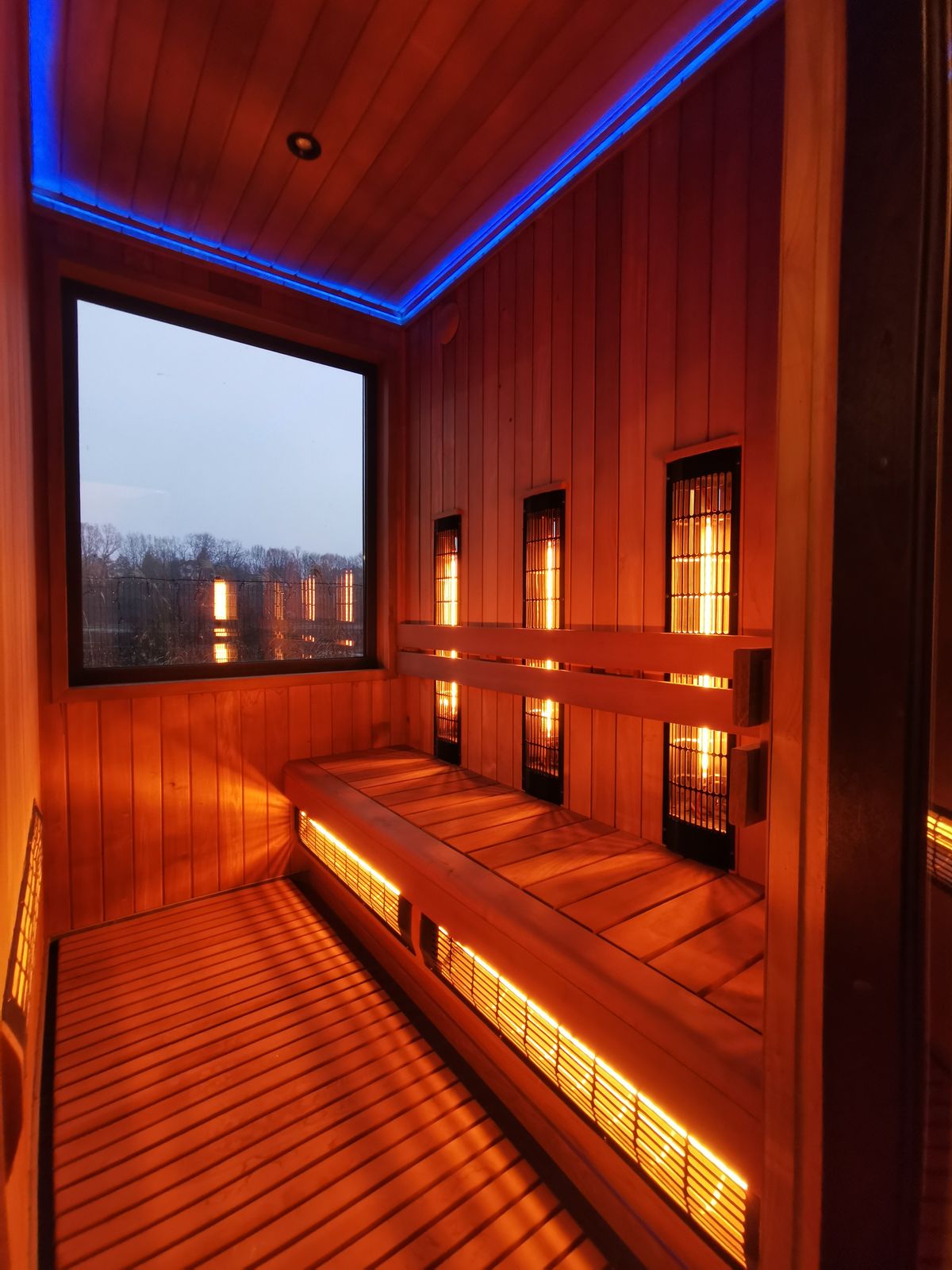
Panoramic Glass Walls
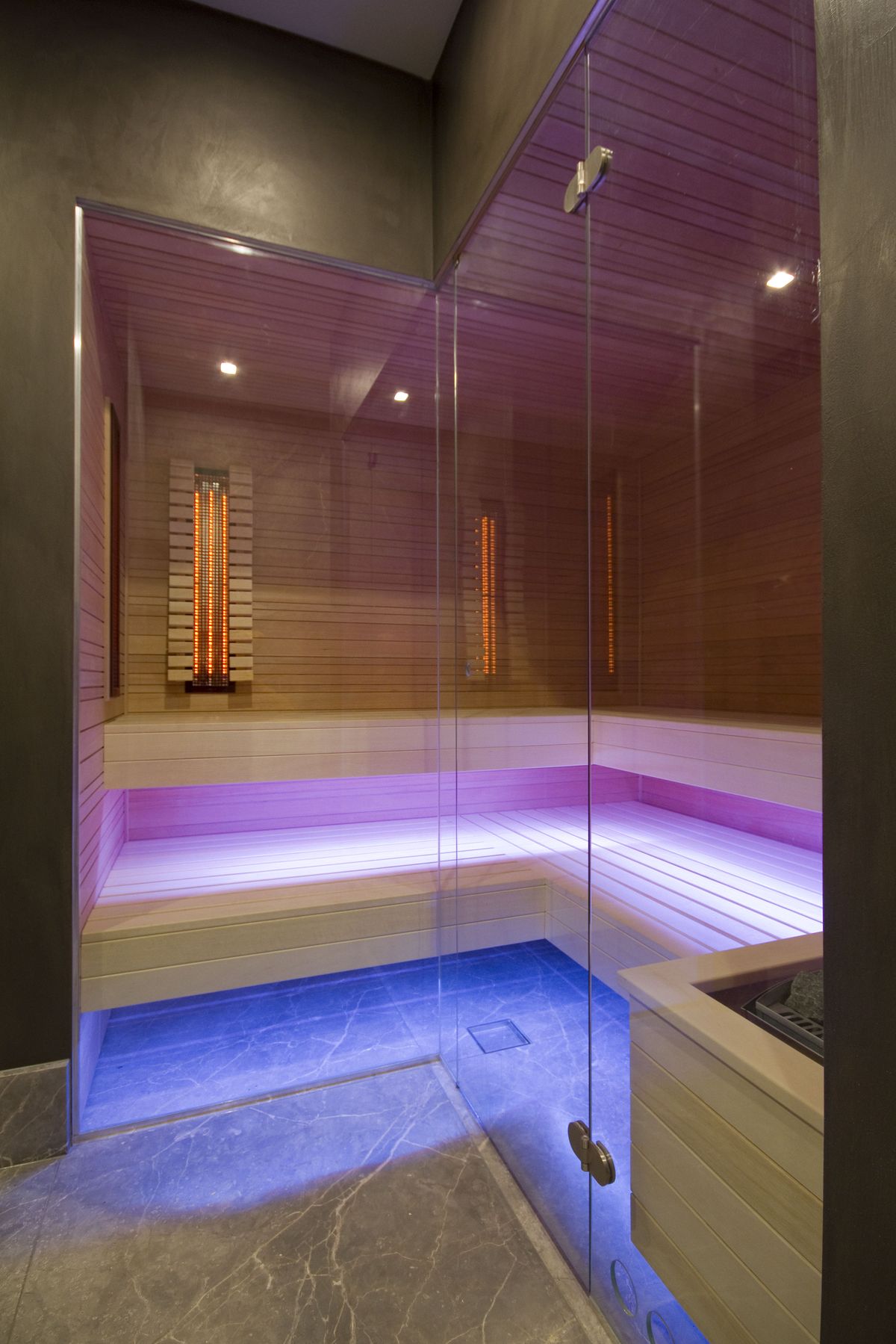
Another growing trend is the use of panoramic glazing.
Glass walls help:
- visually expand the space;
- increase natural light;
- integrate the sauna into the surrounding interior;
- create a greater sense of openness.
A modern infrared sauna project increasingly incorporates glass partitions instead of solid walls.
These solutions are particularly impressive in country homes with scenic views or private SPA areas.
Integration into a Home SPA
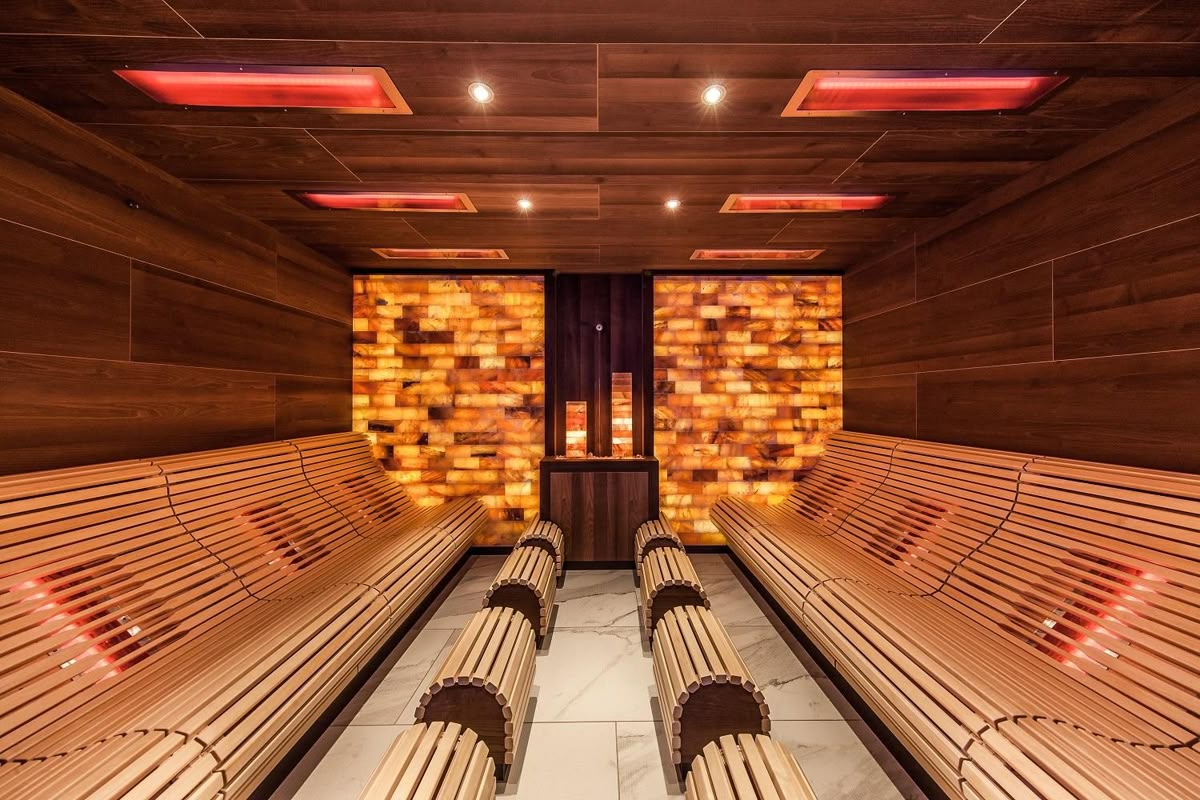
Current trends show that an infrared SPA sauna is rarely designed as a standalone room.
Instead, it is increasingly integrated into a complete wellness environment.
Saunas are often positioned alongside:
- swimming pools;
- shower areas;
- relaxation rooms;
- hammams;
- private wellness spaces.
This approach creates a complete recovery and relaxation experience without leaving home.
For many property owners, a modern home sauna becomes part of a broader healthy lifestyle concept.
Compact Saunas for Apartments
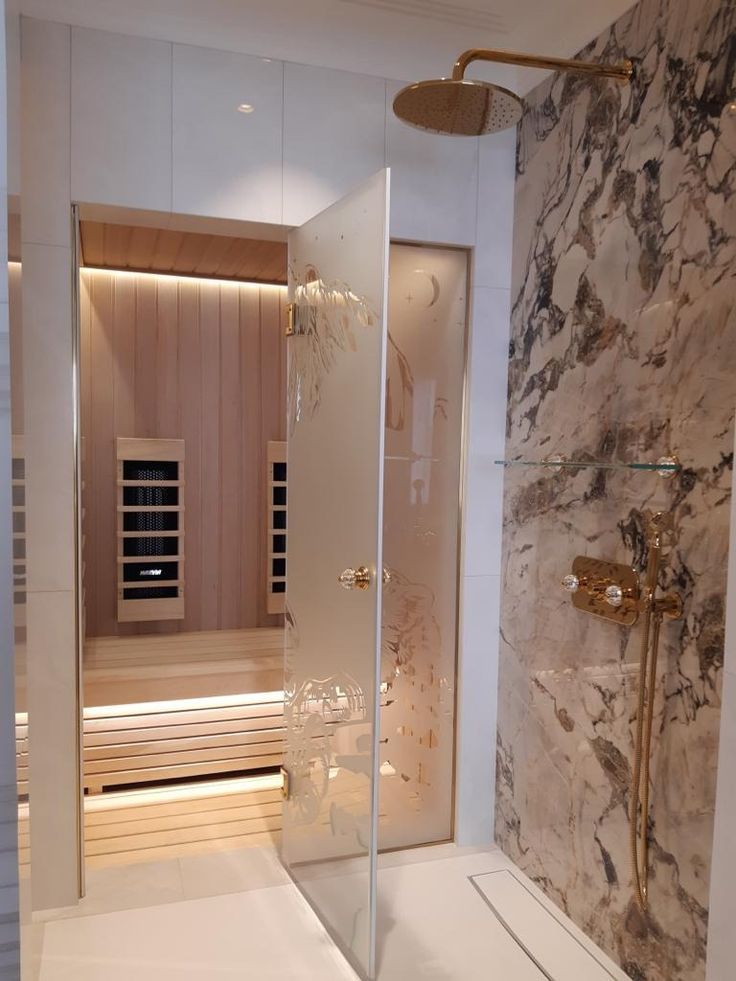
One of the key advantages of infrared technology is the ability to install a sauna even in limited spaces.
A modern infrared sauna for home may occupy only a few square metres.
As a result, these solutions are successfully used in:
- apartments;
- luxury residences;
- compact country homes;
- urban penthouses.
Their compact dimensions make installation possible in locations where a traditional sauna would be difficult to accommodate.
Infrared Sauna Trends in 2026
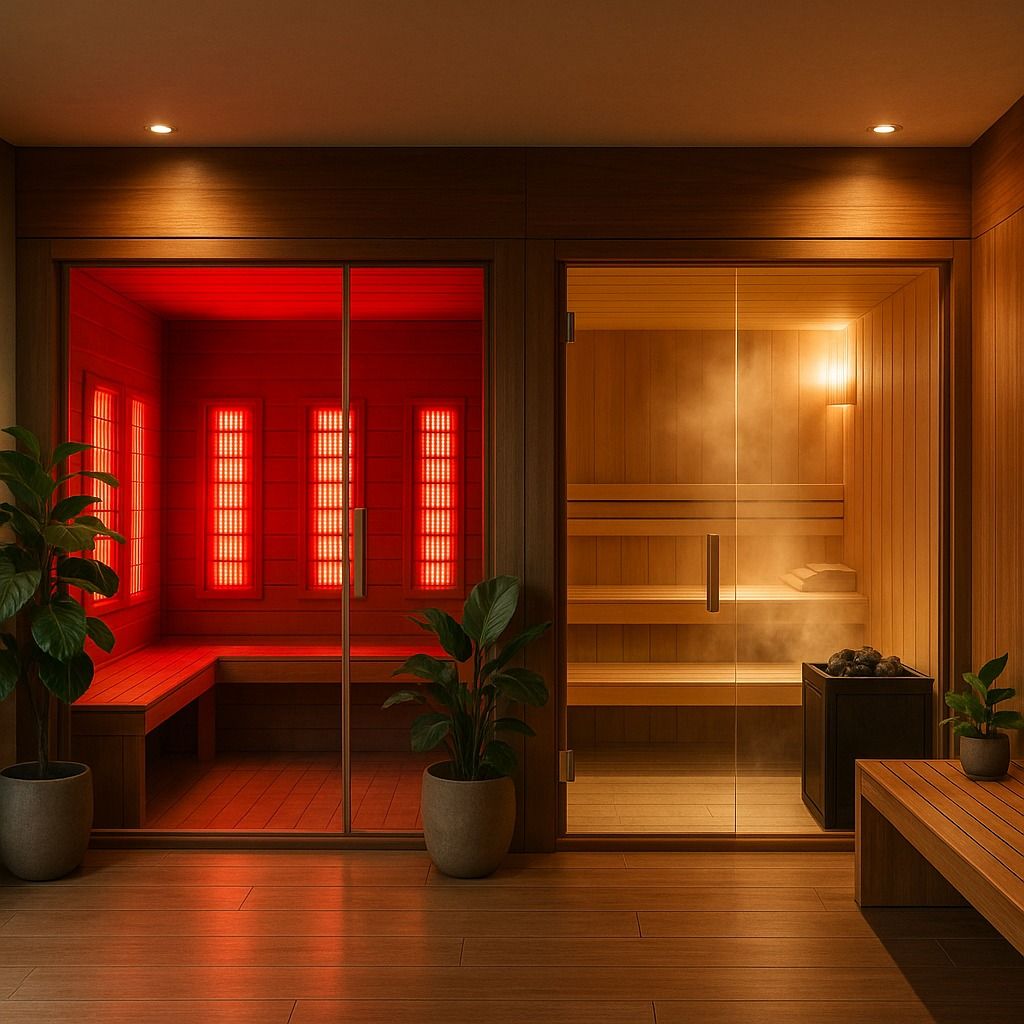
The approach to sauna design has changed significantly in recent years. While infrared saunas were once viewed as standalone cabins, they are now increasingly becoming part of larger wellness concepts.
Key trends for 2026 include:
- integration into home SPA areas;
- panoramic glazing;
- concealed architectural lighting;
- lighting control through mobile devices;
- use of natural materials;
- integration with relaxation zones;
- creation of comprehensive wellness environments.
Modern infrared sauna design focuses not only on aesthetics, but also on atmosphere, comfort and user experience.
This is why an infrared SPA sauna is increasingly becoming part of a complete wellness journey.
What to Consider When Designing an Infrared Sauna
Even the most advanced infrared sauna cannot provide a comfortable user experience without proper planning. This is why an infrared sauna project should take into account not only aesthetics, but also the technical requirements of the future space.
During the design phase, specialists evaluate the room, engineering systems, intended usage scenarios and the overall concept of the property.
Ventilation
Ventilation remains one of the most important factors.
Although infrared saunas operate at lower temperatures than traditional saunas, proper air circulation is still essential.
A well-designed ventilation system helps:
- maintain a comfortable indoor climate;
- extend the lifespan of materials;
- improve user comfort;
- prevent excessive moisture accumulation.
Power Supply
The installation of an infrared sauna requires careful electrical planning.
The following factors should be considered:
- equipment power requirements;
- electrical network capacity;
- dedicated power circuits;
- safety regulations;
- dedicated power circuits;
- safety regulations.
Accurate calculations help prevent overloads and ensure reliable system performance.
Placement of Infrared Panels
The effectiveness of an infrared sauna depends heavily on the positioning of the heating panels.
Panels should be installed in a way that ensures even heat distribution and a comfortable experience for users.
When developing an infrared sauna project, it is important to consider:
- seating layout;
- room dimensions;
- number of users;
- equipment specifications.
Insulation and Materials
High-quality insulation helps reduce heat loss and improve energy efficiency.
The most commonly used finishing materials include:
- cedar;
- linden;
- alder;
- thermally modified wood.
These materials offer excellent performance and help create a pleasant atmosphere inside the sauna.
Room Size and Number of Users
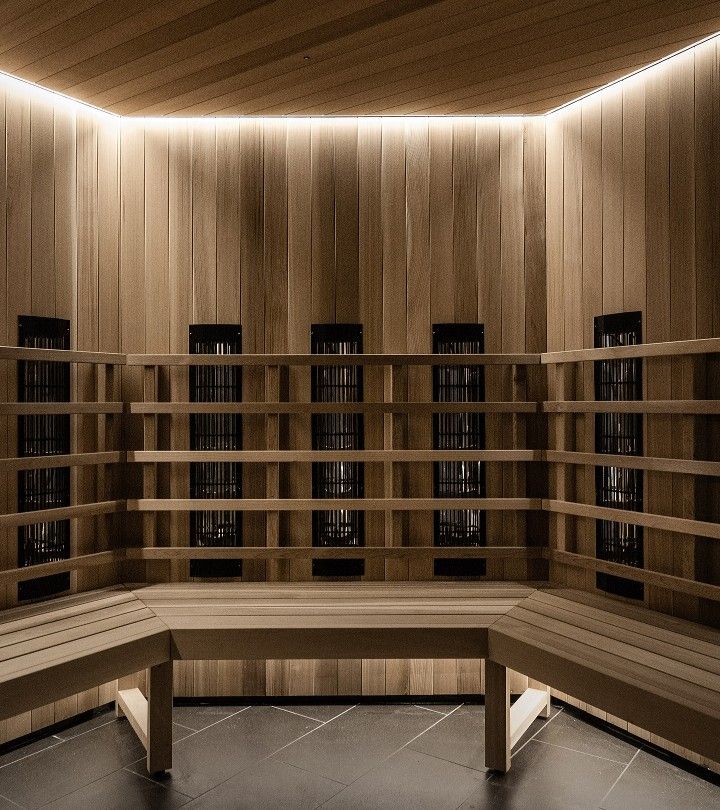
During the planning stage, it is important to determine:
- the number of users;
- sauna dimensions;
- available floor space;
- intended usage scenarios.
The more accurate the planning process, the more comfortable the infrared sauna for home or commercial facility will be in the long term.
Common Infrared Sauna Design Mistakes
Even high-quality equipment cannot guarantee a successful result if mistakes are made during the design phase.
In practice, most problems originate at the concept development stage.
Incorrect Panel Placement
If infrared panels are installed without considering human ergonomics and seating positions, heating efficiency may be reduced.
As a result, users experience a less comfortable sauna session.
Insufficient Ventilation
Ignoring ventilation requirements can negatively affect indoor air quality and overall user comfort.
Electrical Planning Errors
Insufficient electrical capacity or a lack of preliminary calculations can lead to unstable equipment performance and additional costs in the future.
Using Inappropriate Materials
Not all materials are suitable for long-term exposure to elevated temperatures.
For this reason, an infrared sauna project should consider both visual appeal and long-term durability.
Lack of Integration into the Overall Interior
One of the most common mistakes is designing the sauna separately from the overall concept of the property.
A modern home sauna should feel like a natural part of the environment rather than a standalone technical installation.
This is why professional planning helps avoid costly modifications after construction is complete.
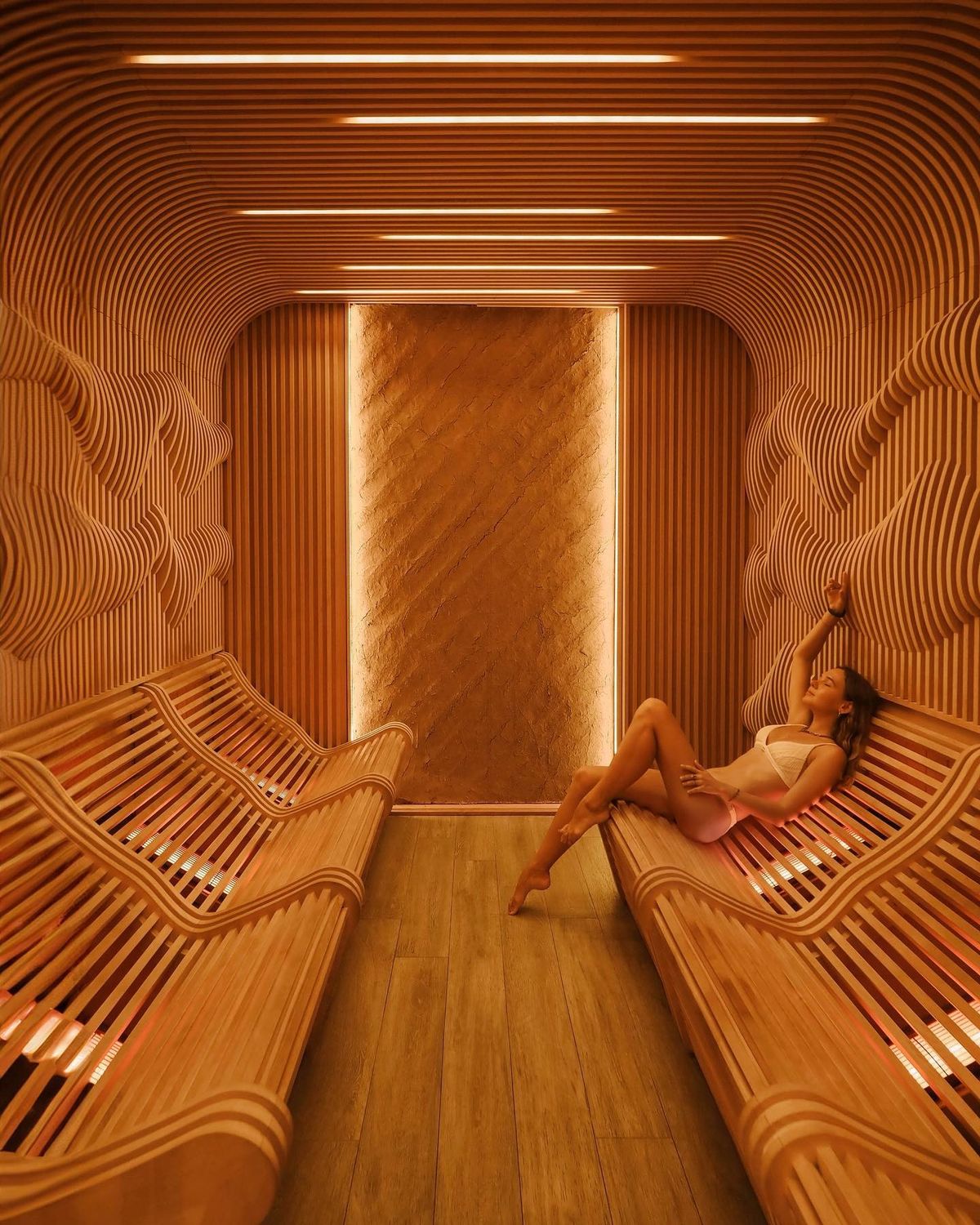
Building an Infrared Sauna in 2026
Today, building an infrared sauna involves far more than simply installing a prefabricated cabin.
Modern projects require a comprehensive approach in which the sauna becomes part of a larger recovery and relaxation environment.
In recent years, the market has gradually moved away from viewing infrared saunas as standalone features. Instead, they are increasingly integrated into complete home SPA and wellness environments.
In contemporary private residences, an infrared sauna for home often becomes part of a larger complex that may include:
- swimming pools;
- shower areas;
- relaxation rooms;
- hammams;
- dedicated relaxation spaces.
This approach creates not just individual rooms, but a complete recovery journey.
Modern projects increasingly focus on the sequence of experiences and user comfort. Visitors move through different areas, each designed to enhance the effect of the previous one.
For this reason, a successful infrared sauna project requires not only technical knowledge of the equipment itself, but also a deep understanding of wellness-space design principles.
The construction process typically includes:
- Site analysis.
- Concept development.
- Design and planning.
- Material selection.
- Engineering system preparation.
- Structural installation.
- Infrared sauna installation and equipment integration.
- Testing and commissioning.
The most successful projects are those in which the sauna is seamlessly integrated into the overall interior and complements the architecture of the space.
Frequently Asked Questions
Can an infrared sauna be installed in an apartment?
Yes. Thanks to their compact dimensions, many modern models can be installed in apartments and private residences, provided that ventilation and electrical requirements are met.
Which is better: an infrared sauna or a traditional sauna?
Both options offer unique advantages. An infrared sauna provides a gentler heating experience, while a traditional sauna delivers the classic high-temperature sauna environment.
How much space does an infrared sauna require?
The required space depends on the number of users and the chosen configuration. Many modern units occupy only a few square metres.
Are infrared saunas suitable for SPA facilities?
Yes. An infrared SPA sauna is frequently used as an additional wellness feature in hotels, fitness clubs and SPA centres.
What should be considered before building an infrared sauna?
Before construction begins, it is important to assess the room, electrical infrastructure, ventilation, finishing materials and intended usage scenarios.
Conclusion
Today, the infrared sauna in 2026 remains a popular solution thanks to its comfortable operating temperature, modern design and ability to be installed even in limited spaces.
These projects are successfully implemented in both private homes and commercial facilities. At the same time, the quality of planning has become just as important as the equipment itself.
Experience shows that many saunas are designed around attractive visual concepts. However, the most successful projects emerge when usage scenarios, visitor movement patterns and the interaction between different relaxation areas are considered from the very beginning of the design process.
A modern infrared sauna for home is increasingly becoming part of a larger home SPA environment where every zone contributes to a shared goal: comfort, relaxation and recovery.
This is why more homeowners, hotel operators and commercial property owners choose companies that understand not only design, but also the principles behind creating complete wellness environments.
If you are planning to create an infrared sauna in 2026, consulting experienced specialists will help you choose the most suitable solution for your space.