
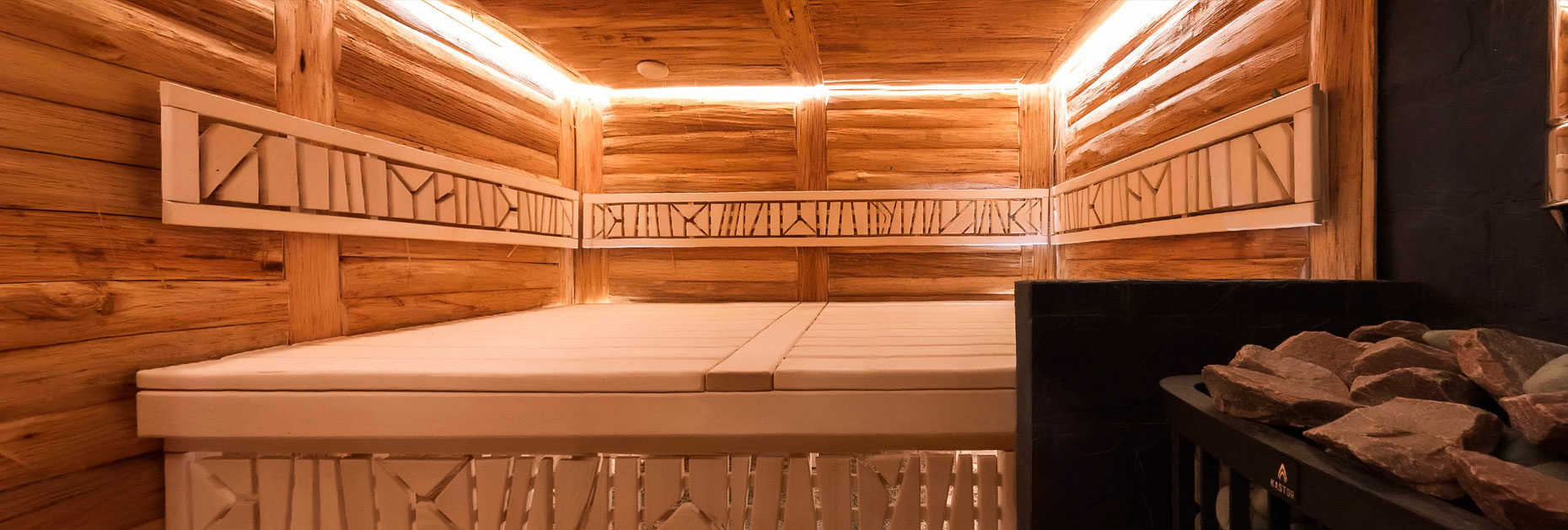
Hotel wellness infrastructure: hammam, sauna, and spa as the basis for the longevity concept
The modern hotel market is rapidly changing. Today, guests choose a hotel not only based on location or service level. The ability to recuperate, relax, and take care of one’s health is increasingly becoming a key factor.
This is why the construction of SPA zones for hotels with a healthy relaxation concept is becoming not an additional option, but rather an integral part of the project’s architecture.
While spas were once perceived as a pleasant bonus, they are now a fully-fledged competitive tool. Hotels that incorporate hamams, saunas, and thermal areas during the design stage develop a stronger and more sustainable concept.
As a developer or investor, you must understand that the lack of a well-designed wellness infrastructure is already perceived by the market as a limitation. This is why building spa areas for hotels is becoming a strategic decision, not an additional service.
SPA infrastructure and construction of SPA zones for hotels as a new standard
Wellness tourism is showing steady growth. According to various estimates, over 60% of travelers choose hotels where they can not only spend the night but also recharge physically and emotionally.
Guests are tired of noisy vacations. They seek peace, warmth, relaxation, and new experiences. That’s why building spa areas for hotels with a healthy relaxation concept is a logical step for any modern project.
Hotels without such zones are increasingly losing out to competition. The reason is simple: they fail to address guests‘ key needs—restoration.
A spa is no longer a luxury. It’s a basic infrastructure, like a restaurant or a gym. That’s why the construction of spa areas is now a concept.
If you are planning to develop a hotel property, it is worth exploring the approach to
construction of SPA zones.
What SPA zones are included in the construction of SPA zones for hotels?
A modern spa infrastructure isn’t a single object. It’s a system of spaces that work together to shape the guest’s journey.
It’s important not just to add individual elements, but to create a logical ecosystem. This is why building spa areas for hotels with a healthy relaxation concept requires a comprehensive approach.
Hamam as the center of the SPA zone in the construction of SPA zones for hotels
The hammam occupies a key position in most SPA complexes.
The reasons for its popularity are obvious:
- suitable for almost all categories of guests
- comfortable for a long stay
- works well in SPA concepts
Unlike dry saunas, a hammam creates a gentle environment. The temperature is lower and the humidity is higher. This allows guests to stay longer and experience deeper relaxation.
This is why, when building SPA areas for hotels with a healthy relaxation concept, the hammam often becomes the central point of the space.
More details about the implementation:
Read about the implementation of hammams
Finnish saunas and thermal zones in the construction of hotel spa areas
The classic sauna remains an important element of the SPA infrastructure.
It creates a contrast to wet areas and enhances the effect of the treatments.
The most commonly used are:
- dry saunas
- areas with contrast cooling
- cold baths
The combination of hot and cold stimulates the body, improves circulation and enhances the overall feeling of recovery.
It’s important to properly integrate these zones into the overall guest experience. That’s why the design of hotel spas must take into account the balance of temperature scenarios.
To implement such solutions, we use
Additional space for the construction of SPA areas for hotels
A full-fledged SPA is always more than just a steam room.
Modern hotels include:
- massage rooms
- recreation areas
- swimming pools
- salt or snow rooms
Each space fulfills its own function. Together, they create a holistic experience. This is why the construction of spa areas for hotels with a healthy relaxation concept is viewed as the creation of an ecosystem.
What is important to consider when building SPA areas for hotels
This block is critical for developers.
Mistakes at the planning stage lead to costly rework. That’s why building hotel spas requires precise calculations from the start.
Key factors:
- Area and placement
The SPA should be logically integrated into the structure of the building.
- Engineering requirements
Water, steam and electrical systems require precise calculations.
- Humidity and ventilation
Without proper ventilation it is impossible to ensure comfort.
- Guest logistics
The route should be intuitive.
A spa is a complex facility. It can’t be „added later“ without causing losses. Building a hotel spa always begins with proper design.
If you are at the stage of choosing a contractor, study:
How to choose a contractor for turnkey SPA center construction?
When to plan the construction of SPA zones for hotels – before or after
Experience shows that attempting to add a SPA after construction is complete almost always leads to problems.
Main difficulties:
- lack of space
- restrictions on engineering systems
- ventilation problems
- design compromises
As a result, spas are less effective and more expensive. This is a direct consequence of the fact that the construction of spa areas for hotels was not planned in advance.
If the zone is laid out immediately:
* easier to integrate systems
* you can think of a route
* a high level of quality is achieved
How does the construction of hotel spas impact the economy?
SPA directly influences the project’s economics.
Main effects:
- increase in the average bill
- formation of a wellness format
- sale of additional programs
Guests stay longer. They come back. They are willing to pay for the experience.
Building SPA areas for hotels with a healthy relaxation concept strengthens their positioning and makes the facility sustainable in the market.
Let’s sum it up
A modern hotel is more than just a place to stay. It’s a space for rejuvenation. A hammam, sauna, and wellness areas form the foundation of this concept. Without them, it’s difficult to compete and retain guests‘ attention.
Building spa areas for hotels with a healthy relaxation concept is a systematic process that integrates architecture, design, and guest experience.
If you’re planning a new project or renovation, start with a concept. Building hotel spas is crucial to a property’s future competitiveness.
Contact us to get a solution that will work not only visually, but also as a full-fledged business tool.